
Hopkins County Weekly Arrest Log
No sheriff or jail page in Hopkins County works as a full weekly arrest blotter. The jail site covers custody rules and facility details. The sheriff site points visitors toward the jail, courts, VINE, and state corrections. Madisonville Police posts media material. Dawson Springs shows a social feed. Yet none of them offers a date-sorted county booking log. Earlington lists no public police booking feed. Since records sit with different agencies, a weekly arrest search has to cross several desks.
The log period is not the same as custody, either. A person arrested Friday may get booked after transport. The same person might show up in a Monday news release. And they could leave the Hopkins County Jail before any archive catches it. A citation might never involve a county-jail stay. Someone else could sit in custody on a warrant from another county. Sort every result by event: arrest, completed booking, release or transfer, and court disposition.
Read the Hopkins Arrest Blotter
Start with official sources. Keep the date range small. The agency that made the arrest holds the incident report. Hopkins County Jail keeps the booking and custody record for people it accepted. The Court of Justice owns the case history once charges are filed. A news story can flag the agency or add context. It is not the record itself.
- Choose the week and note whether it crosses a weekend or holiday.
- Check official sheriff, city police, and jail pages for releases or custody directions.
- Search local news by the person’s name, city, and approximate date, then note the named arresting agency.
- Ask that agency for its arrest or incident report and ask the jail for the booking record.
- Match the result to the Hopkins County court docket and read the disposition rather than relying on the booked charge.
A same-day search fits the Hopkins County Daily Arrest Report better. The weekly method exists for catch-up. It compares records that have already rolled past a same-day view.
Hopkins Arrest Log Fields
Hopkins County posts no official online log, so no field list comes straight from the county. Use this inventory to line up a police release against a jail response, a news story, and a court file. Fields from an unofficial archive are claims until the right custodian confirms them.
| Log detail | Best verification source |
|---|---|
| Full name and alias | Jail booking record and court caption |
| Arrest date and time | Arresting agency report |
| Booking date and number | Hopkins County Jail |
| Agency and arrest location | Police or sheriff incident record |
| Charges as booked | Booking record, followed by court docket |
| Bond or release status | Jail and court clerk |
| Booking photo | Separate request to the lawful record custodian |
| Disposition | Kentucky Court of Justice record |
Arrest date and booking date trip people up in a weekly list. The two can land on different days. Charges shift just as much. A label in a police release reflects one early stage, while the court may amend, dismiss, or resolve the case another way later.
Hopkins Weekend Arrest Timing
No Hopkins County source promises weekend bookings will post to a public feed on a fixed schedule. Office hours matter. So do review, court processing, and each office's publication choices. The sheriff's records office keeps weekday hours. Newsrooms publish story by story, usually when an agency issues a release rather than at the moment of arrest.
A weekend arrest cluster can appear in stages. Check the jail first for present custody, then contact the arresting agency during business hours. Write down the date and time of each check. A Monday story may cover a Saturday arrest. Keep the arrest date separate from the publication date. For a formal record, submit a written request to the office. Name the incident date range and the exact documents you want.
Note: Weekend and holiday gaps may reflect posting schedules rather than a real change in the number of arrests.
Local Hopkins Arrest Reporting
WFMW's News Edge covers crime story by story and sometimes runs jail-supplied booking photos. It is not a daily mugshot gallery or a full county log. One sourced example is a Madisonville drug-bust report. It names the event and where custody details came from. Regional 14 News also picks up selected Hopkins County cases. Both outlets choose newsworthy events, so silence never means no arrests happened.
The WFMW News Edge page shows how the outlet arranges its coverage. Its layout is story-based, not a date-complete blotter.

Pull the story date, agency name, and event details as leads for an official request. Then confirm the charge and result in the court record.
Checkpoint Reports and Arrest Logs
Kentucky State Police Post 2 checkpoint locations cover Hopkins County routes like U.S. 62, U.S. 41, KY 109, KY 336, and KY 481. Checkpoint lists answer a different question than a jail log. They name possible enforcement spots. A later release may mention citations or arrests. But neither document gives a complete list of everyone booked at the county jail that week.
City police releases follow the same selective pattern. Madisonville offers a media path and forms, while Dawson Springs embeds Facebook posts. When a release names the arresting agency, send the record request there. When it names Hopkins County Jail as the booking destination, ask there as well. The right county custodian can also provide the booking record. Two requests may be needed. The arrest report and the booking record document different acts.
Unofficial Hopkins Arrest Archives
Two private archives go deeper into the past than any current agency page in Hopkins County. Arrests.org’s Hopkins County section lists cards with dates, charge text, photographs, paging, and archive navigation. Mugshots.zone’s Hopkins section takes a different route, sorting its arrest content into date and month archives. An old booking entry can linger after a release, dismissal, sealing, or expungement. That lag is worth remembering. The Mugshots.zone Hopkins page proves only that month-based navigation exists, not that any listed arrest is still accurate. Neither archive speaks for the government.
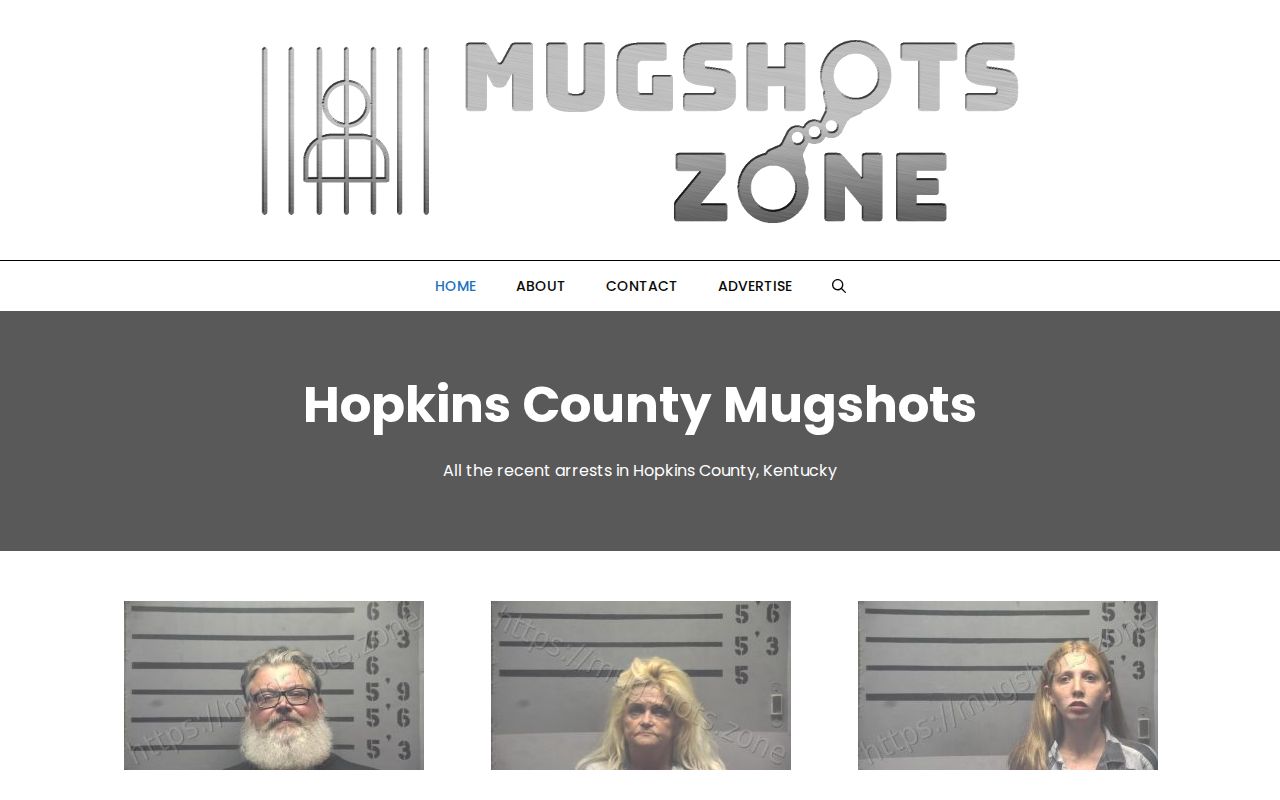
Pin down an approximate booking date, then stop. The archive is just a lead. The name and date belong with the sheriff, jail, police, or court custodian holding the actual record. Arrests.org opens year, month, and daily routes, including a 2024 archive. Mugshots.zone reaches back by month. Its spans run to at least January 2021. Those depths measure website size, not county retention or any official arrest count, and entries can be missing, duplicated, or stale, so the custodian settles it.
Hopkins Arrest Record Retention
County web pages die young. Kentucky's County Jailer schedule defines a Jail Register series with booking, commitment, offense, officer, discharge, and days-confined fields. Destruction comes five years after release. Separate local law-enforcement series keep criminal-history jackets and arrest photographs longer. Schedules classify records. They never promise that every item is public or lives in one Hopkins County database.
Older dates call for the sheriff's written request process. Be specific. Give the person, the approximate dates, the likely agency, and the record itself, whether an arrest report, jail register entry, booking record, or booking photograph. The sheriff page spells out Kentucky residency rules, delivery options, fees, and a five-business-day notice framework. Another agency may hold the item.
Arrest records still pair with a court check. Juvenile material, sealed or expunged matters, medical facts, victim details, and active investigations can be restricted or redacted. The Hopkins County arrest records hub maps those boundaries across county, state, and federal custody.
Moved files start with the Hopkins Circuit Court Clerk. Kentucky's process for transferred State Records Center material requires a case or file locator. KDLA helps identify a retention series. It runs no booking-photo database. Retention rules set a shelf life for each class of county record. They guarantee neither online access nor release of every field.
Arrest Logs Do Not Convict
A log entry is only a starting point. Follow the Hopkins County Court of Justice case to disposition, the term for the court's outcome. Names can match by accident. Dates get copied wrong, and unofficial archives often miss later changes to a case.